
DENTURE INSIDE
In Italy They Stopped Using Denture Adhesive Decades Ago. Here Are 10 Reasons Why.
By Dr. Brenda Sue | Prosthodontist, 24 years | Updated this week
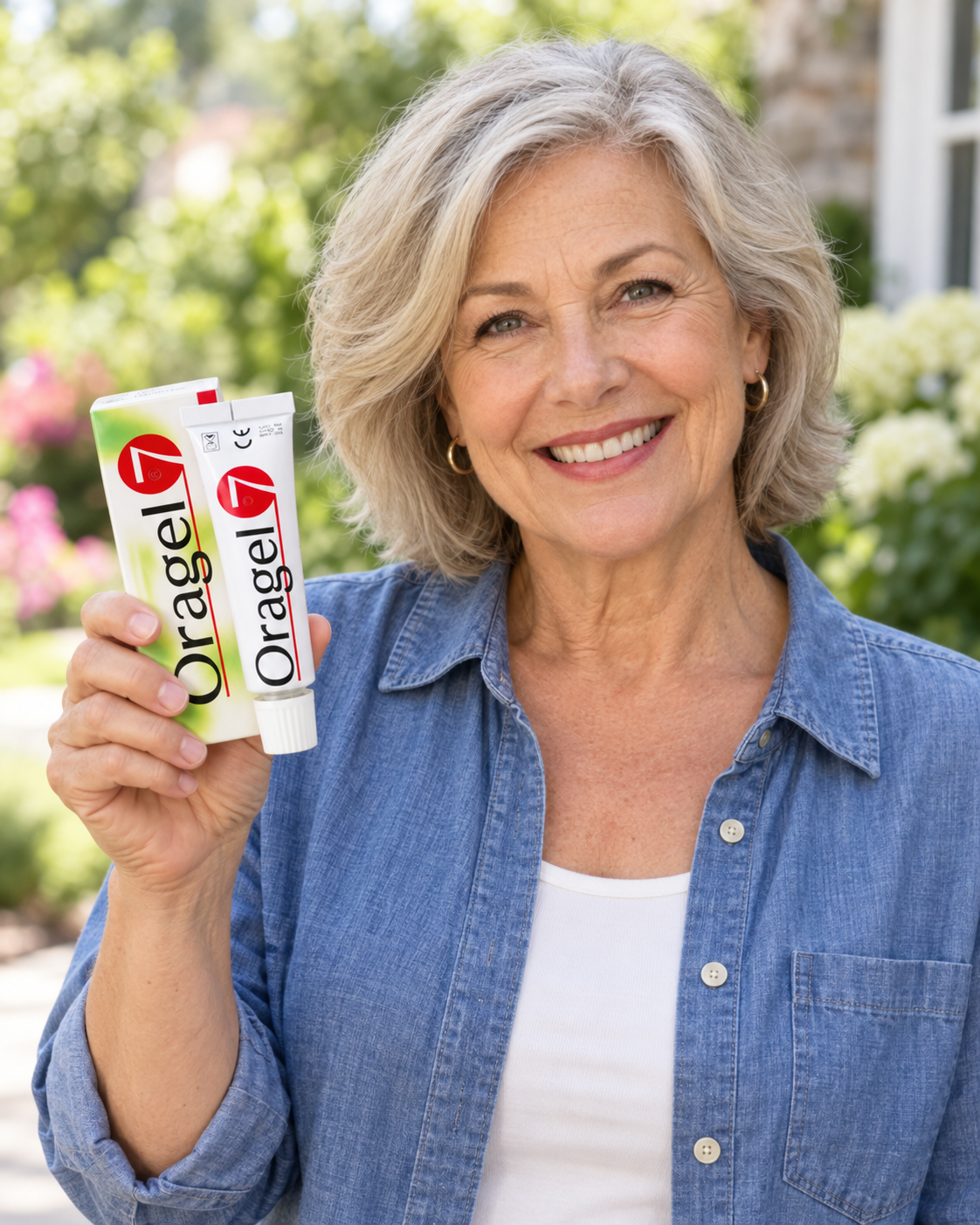
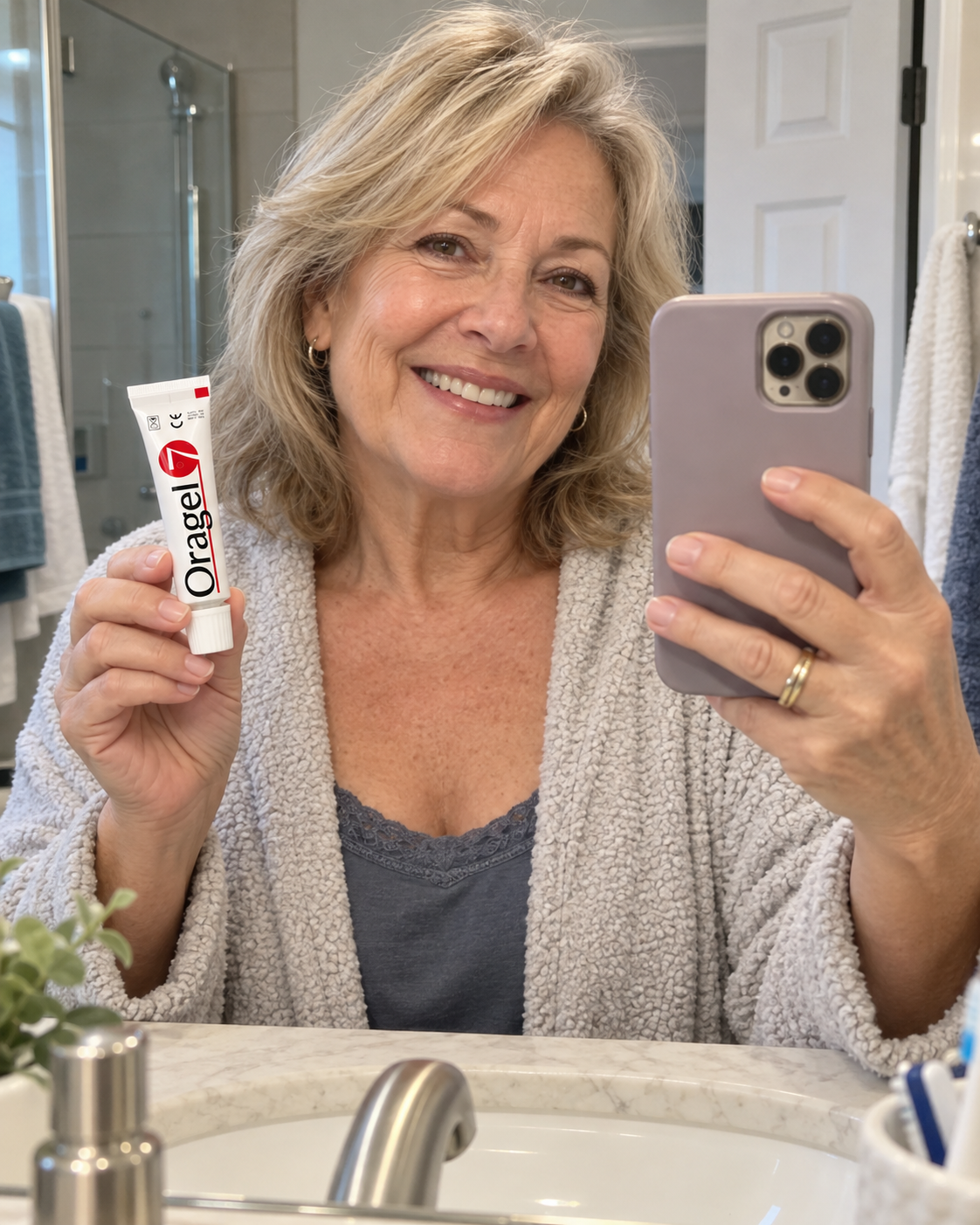

In Italy, denture wearers almost never use adhesive paste. It is not the standard there. We spend entire appointments talking patients out of it.
I moved to the UK two years ago and what I found in the exam chair genuinely confused me. Patient after patient reapplying cream 3 and 4 times a day, scrubbing residue off their gums every night, and every single one of them believing they were doing something wrong.
They were not doing anything wrong. Here is what nobody explained to them, and the material Italian clinics have used instead for decades.
1. Your Jawbone Has Been Shrinking Since the Day Your Teeth Came Out
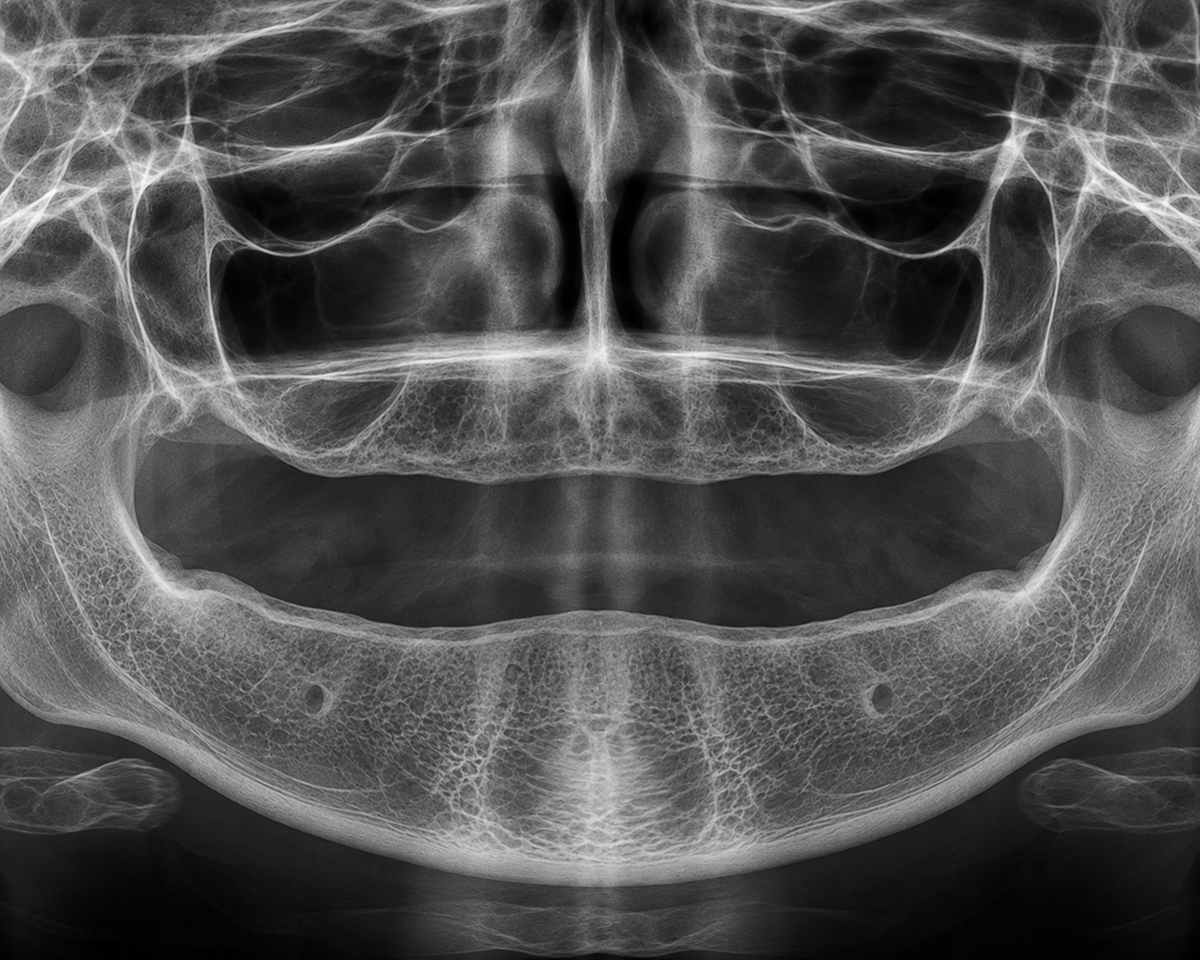
It is called resorption. When you had natural teeth, the roots pressed a signal into the bone every time you chewed, telling it to hold its shape. Once the teeth are gone, that signal stops.
The ridge your denture sits on shrinks a little every month. It never stops. Not in year one, not in year ten. And you cannot feel it happening.
This happens everywhere in the jaw, but the lower ridge shrinks several times faster than the upper. That is why your bottom plate is almost always the first one to start floating.
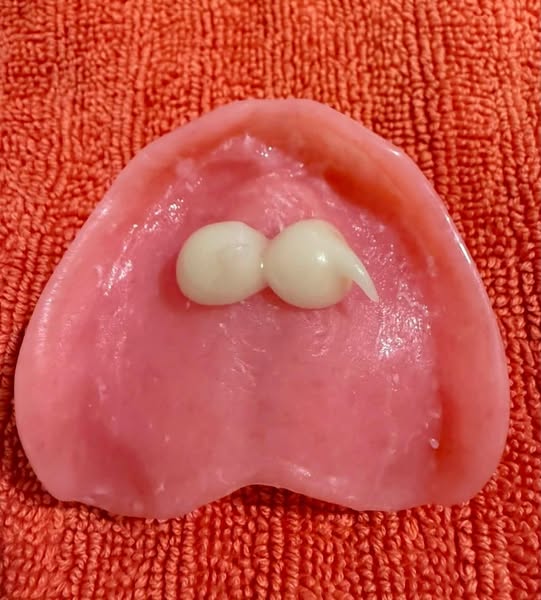
2. There Is a Physical Gap Under Your Plate Right Now
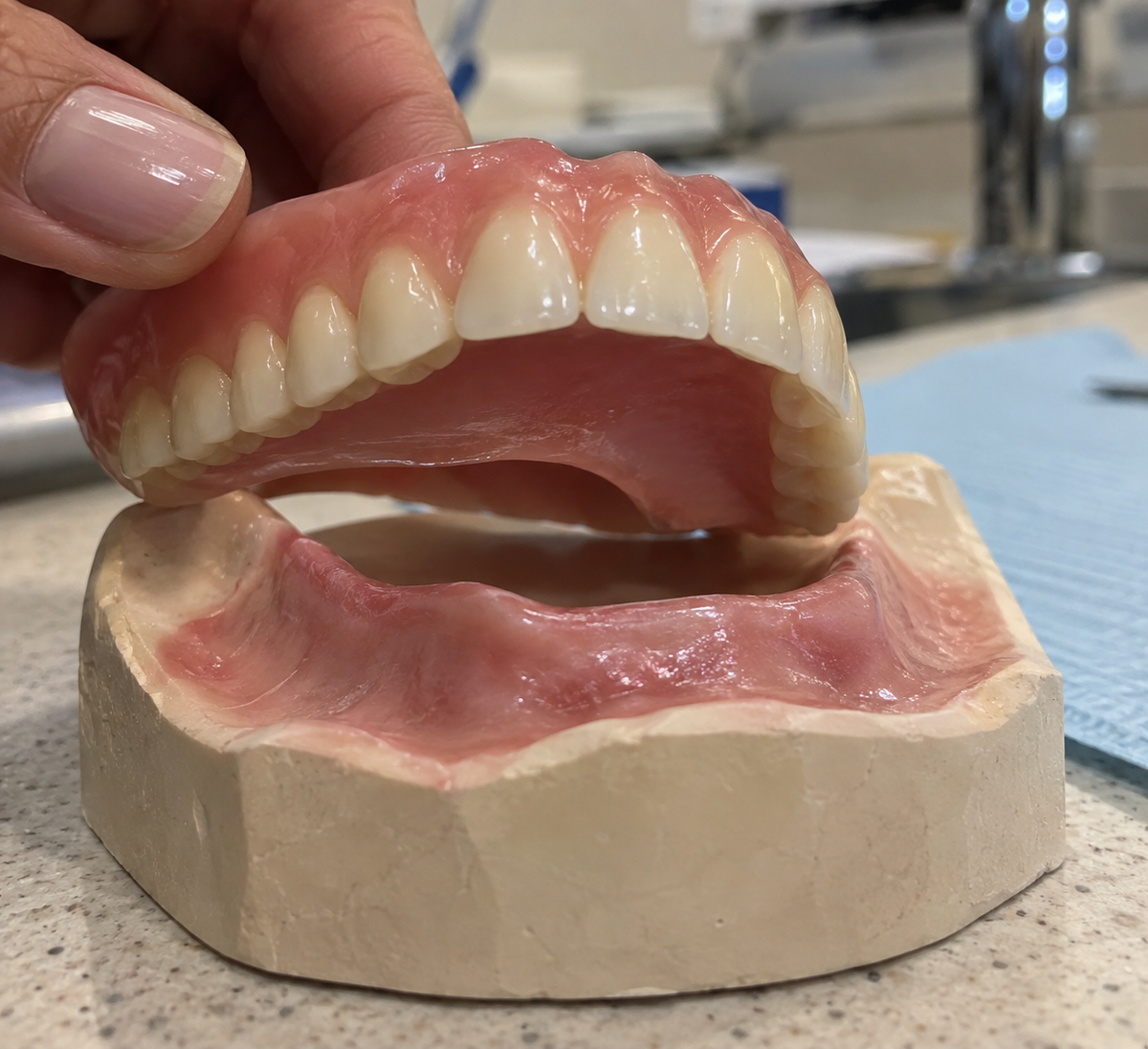
Your denture was carved to match the ridge you had the day it was made. That ridge is not the same shape anymore. The denture has not changed at all.
So a space has opened up between your gum and the underside of your plate. Small enough that you cannot see it. Big enough that the denture floats every time you eat.
On a lower denture this gap is even more of a problem. The bottom plate has no palate to create suction. It sits on a narrow horseshoe of ridge with your tongue pushing against it from the inside. Once a gap opens on the bottom, paste has almost no chance.
3. Adhesive Cannot Cross That Gap - and It Was Never Your Fault
Paste is a bonding agent. It sticks two surfaces that are already touching each other. That is all glue does.
Once there is air between the plate and the gum, glue has nothing to hold onto. It sits on top of the space and your saliva breaks it down in about 3 hours.
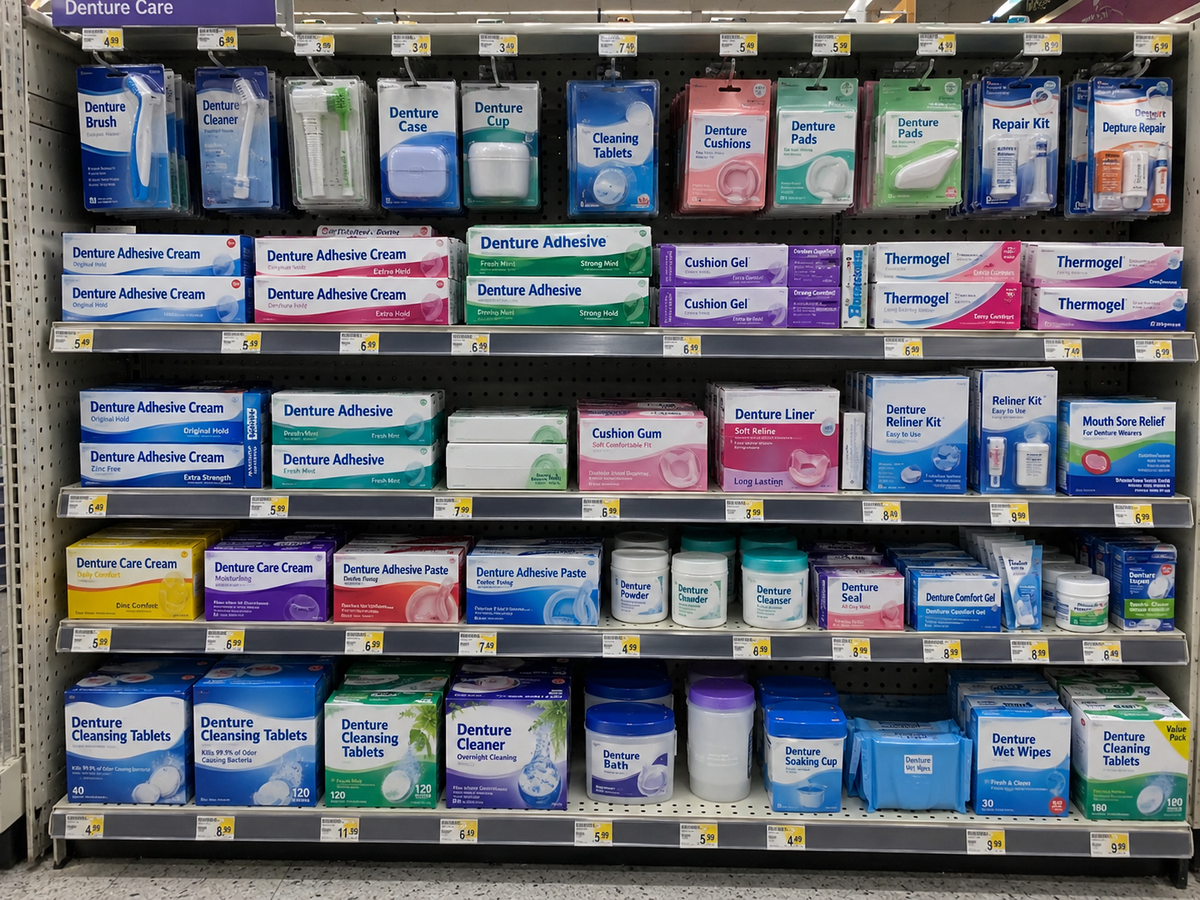
That is not a flaw in the brand. That is what adhesive is. Fixodent, Poligrip, the powder, the strips, every one of them is doing the same impossible job with slightly different chemistry.
Almost every patient who sits in my chair apologises to me. They tell me they are probably applying it wrong. They ask if they should be using more. You could use half a tube. A whole tube. It would not matter. You have been applying a surface adhesive to a structural problem for years, and nobody told you.
4. Italian Clinics Fill the Gap Instead of Coating Over It
In Italian dental schools we are taught that one specific class of material fills that gap and does what adhesive cannot. Dental-grade thermoplastic.
It is solid at mouth temperature. It softens when warmed, moulds into the exact shape of whatever it is pressed against, and holds that shape when it cools.
We use it in Italy for many things. Night guards. Clear aligners, what most people call Invisalign. Temporary crowns. Anything in dentistry that has to fit one specific mouth and stay exactly where it is placed.
You warm the tube in a mug of hot water. Squeeze two lines of gel into the underside of the plate. Press it in and bite down. The gel takes the shape of the exact gap your bone left behind, then firms up. The plate sits flush against the gum again. Not because it is glued. Because the space is physically filled.
That is not adhesion. That is shape. And once you see the difference, paste stops making any sense at all.
5. It Works on Uppers, Lowers, and Partials - Because the Gap Does Not Care Which Arch It's On
This is the question I hear more than any other. "Will it work on my ___?"
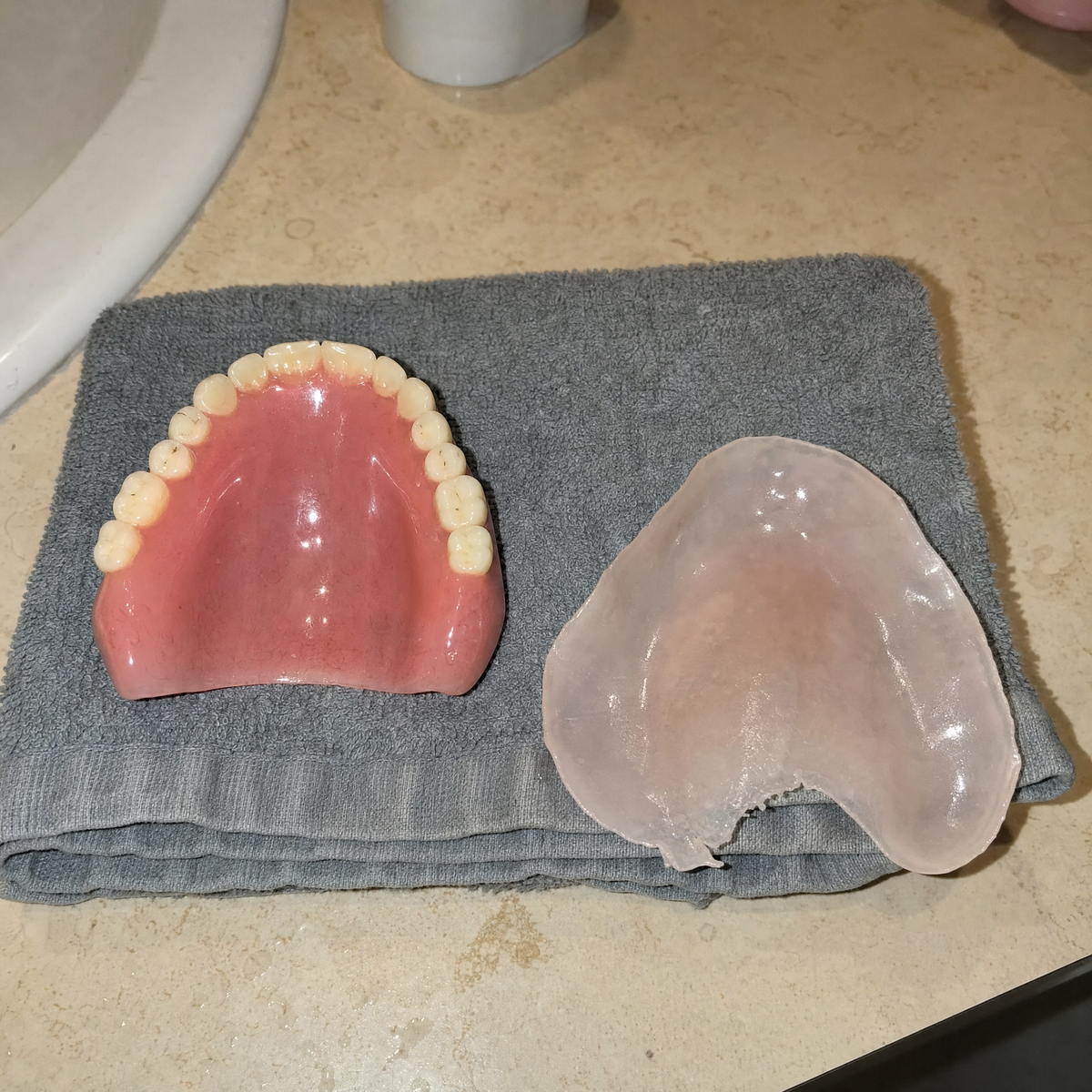
Bottom plate. Top plate. Partial. The answer is the same every time, because the problem is the same every time. The bone resorbs. A gap opens between the plate and the tissue. And that gap is why the plate moves, why food gets underneath, and why paste stops holding by lunch.
Lower plates have it hardest. A narrow ridge. No palate. A tongue that pushes the plate up every time you talk, eat, or swallow. Paste cannot overcome that, because paste was never designed to hold a plate that has nothing pressing it down. Thermoplastic fills the space so there is no room for the denture to lift. The tongue can push all it wants. If the gap is filled, the plate has nowhere to go.
Upper plates are supposed to have suction. That is the design - the plate seals against the roof of your mouth the way a suction cup seals against glass. But when the bone resorbs and the arch changes, that seal breaks. Cream cannot restore suction. It can only try to glue a plate to a surface that no longer matches it. Thermoplastic fills the gap and restores the seal. The suction comes back. The plate stays against the roof of your mouth the way it did when it was new.
If you wear an upper and you have been scrolling past every product because the pictures always show a bottom denture - this is for you too.
Partials shift for the same reason. The teeth the partial clips onto have not changed. But the tissue underneath has. The gap forms in the same place, and the partial rocks every time you chew. Thermoplastic fills that space. The partial sits flat against the tissue again and the rocking stops.
The material does not care which arch it moulds to. It fills whatever gap exists between the plate and the gum. Upper, lower, partial - the physics is the same.

6. One Application Lasts for Days, Not Hours
Adhesive paste holds for 2 to 4 hours because it is fighting a gap it cannot cross. Your saliva dissolves it. You reapply. It dissolves again. By the end of the day you have applied it 3 or 4 times and it is still not holding.
Thermoplastic does not dissolve in saliva. It is a solid material that holds its shape at mouth temperature. One application typically lasts 3 to 5 days, sometimes longer depending on the individual. When it is time to refresh, you do it yourself at home in about 2 minutes. No appointment. No waiting room. No £450 reline bill.
Most of my patients tell me the first thing they notice is not the food. It is that they stopped checking. No pressing the plate up with the tongue at 2 in the afternoon. No tube in the handbag. No excusing yourself halfway through a meal.
7. No Zinc, No Residue, and It Peels Out in One Piece
Many of my patients ask about zinc. After the lawsuits involving certain adhesive brands, it is a fair concern. This material contains no zinc. It is the same class of thermoplastic used for night guards and clear aligners, materials that sit in the mouth for hours at a time.
When it is time to change it, you peel the liner out in a single piece. No scrubbing gunk off the roof of your mouth with a toothbrush at 11pm. No pink residue that never fully comes off. No chalky taste in your mouth at bedtime.
You still take your dentures out at night. Still brush them. Still soak them. The gel stays exactly where you put it, and it does not damage the denture. If you ever want to stop using it, the plate goes back to exactly how it was before.

8. It Costs Less Than One Reline - and It Is Not a £16,000 Implant
I was shocked when I moved to the UK and found that a tube of paste and a £16,000 implant surgery were the two options every denture wearer is given.
A professional reline costs £400 to £650. It fills the gap once, in their chair. But the bone keeps shrinking, so a few months later the gap is back and you are back in the waiting room paying again.
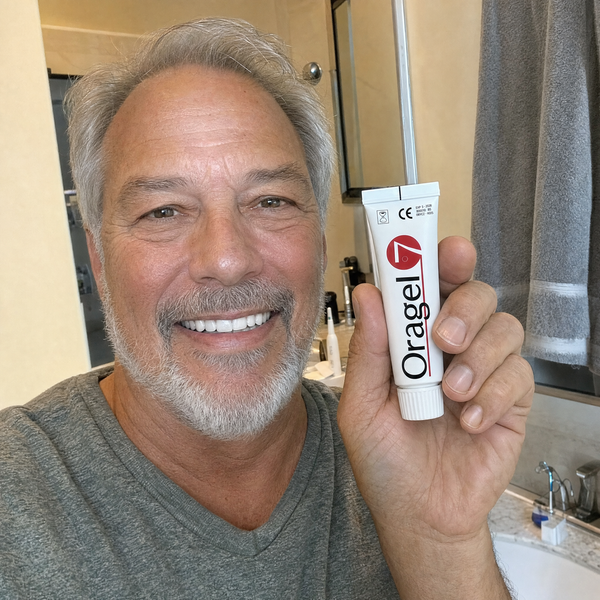
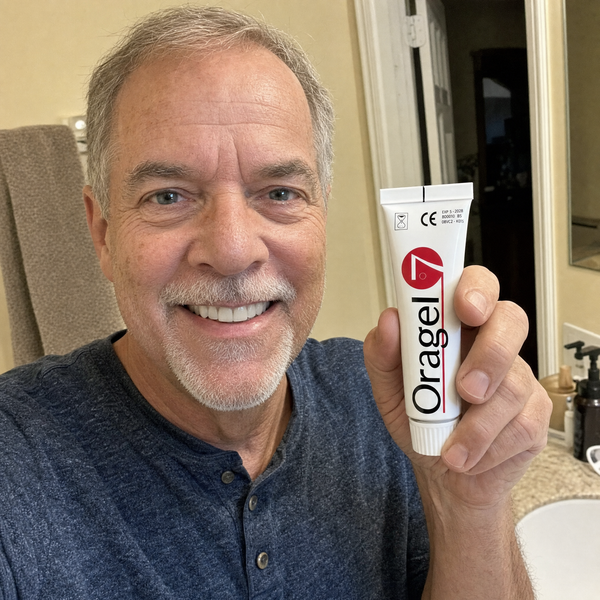
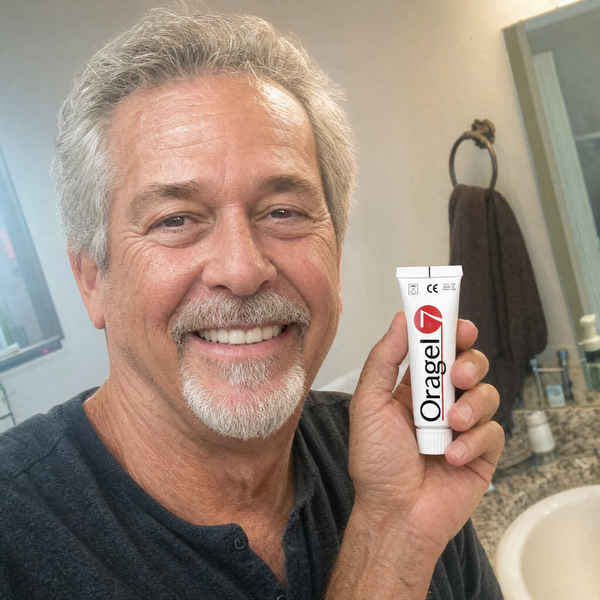
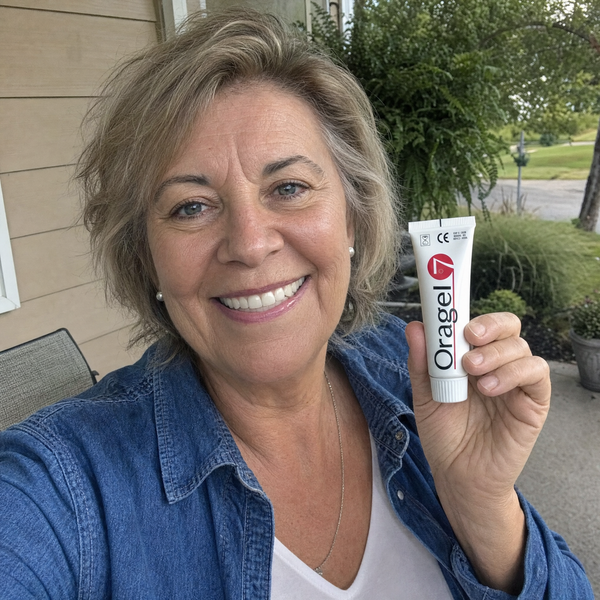
One tube of Oragel costs £40. That is less than what most people spend on paste in 2 months. And you can reapply it at home whenever the ridge changes, without making an appointment, without writing another cheque.
This is not a subscription. There is no auto-refill. You buy a tube when you need a tube.

9. My British Colleagues Were Sceptical. Now Most of Them Recommend It First.
When I first explained the gap and why thermoplastic fills it, the other dentists in my practice were sceptical. It made sense. Every one of them had spent their careers telling patients that paste or implants were the two options.
But they tried it. Their patients stopped cancelling dinners. Their patients stopped carrying tubes. Their patients started ordering the food they had not ordered in years.
Most of my colleagues here now recommend it before anything else. Not because I asked them to. Because their patients kept coming back and telling them it was the first thing that actually worked on their lower plate.
If your dentist has not mentioned this material, it is not because there is anything wrong with it. It is because most British dental schools do not teach it the way Italian programmes do. That is starting to change.
"Nothing moved. The whole meal. Nothing moved."
- Sofia, 68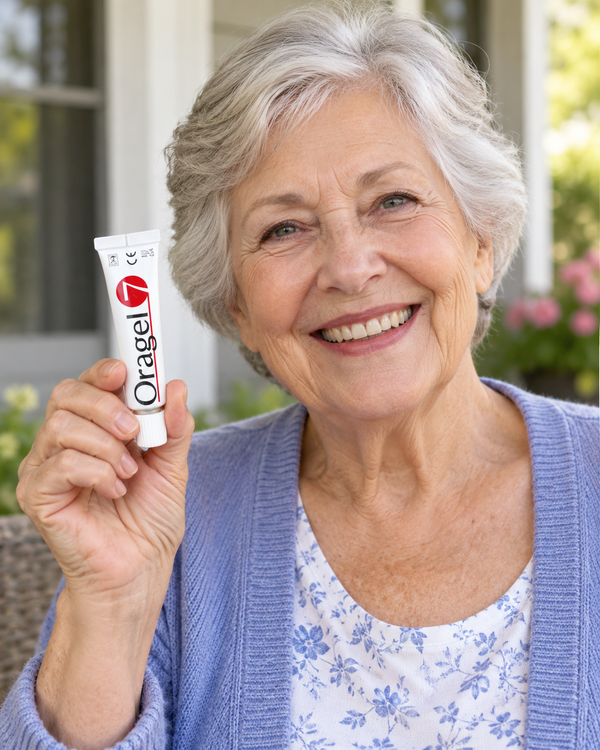

10. Most of Them Never Buy Another Tube of Paste
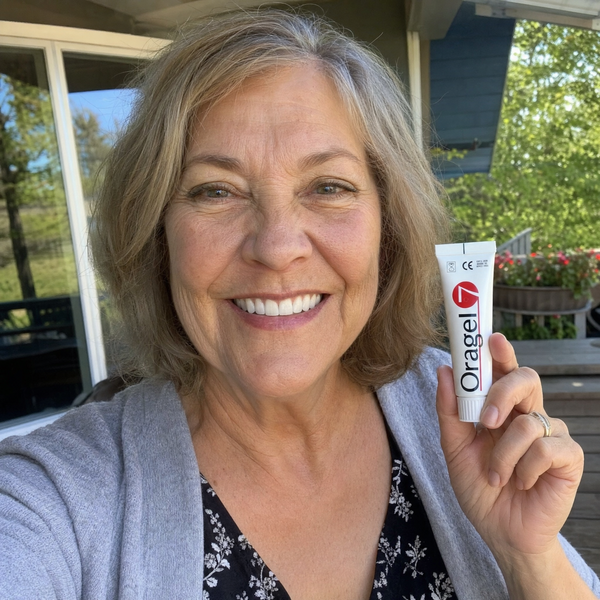
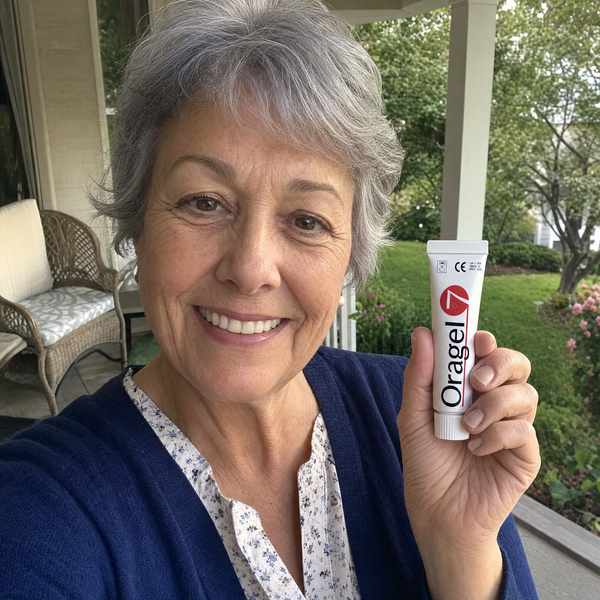
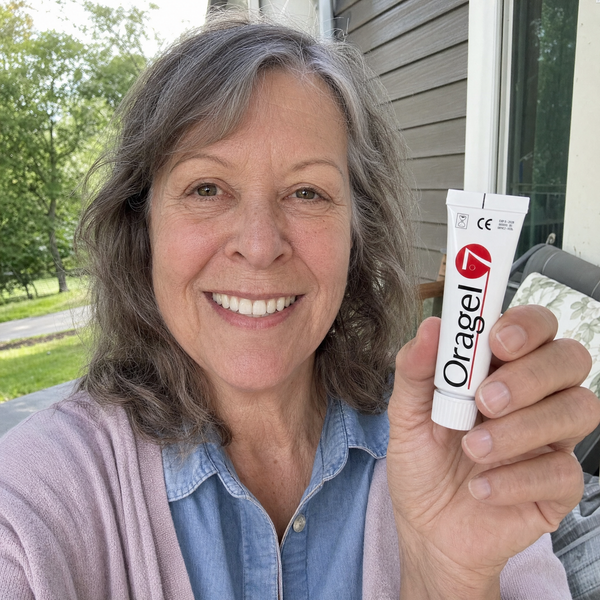
After Sofia, word spread. Patients who had not eaten solid food in front of anyone in years. Patients who carried adhesive in their car, their handbag, their coat pocket, and their desk drawer. A 71-year-old retired teacher who had not eaten an apple in 6 years. A 67-year-old grandmother who stopped hosting Christmas dinner because she could not get through the meal.
Every single one of them stopped buying paste.
Not "used less paste." Not "held a little better." Actually, completely, permanently stopped using adhesive. Most of them were lower-denture patients who had been told their only options were more glue or £16,000 in implants.
Then the food comes back. Steak, usually. Then apples. Somebody always mentions corn.
Where to Get the Right Material
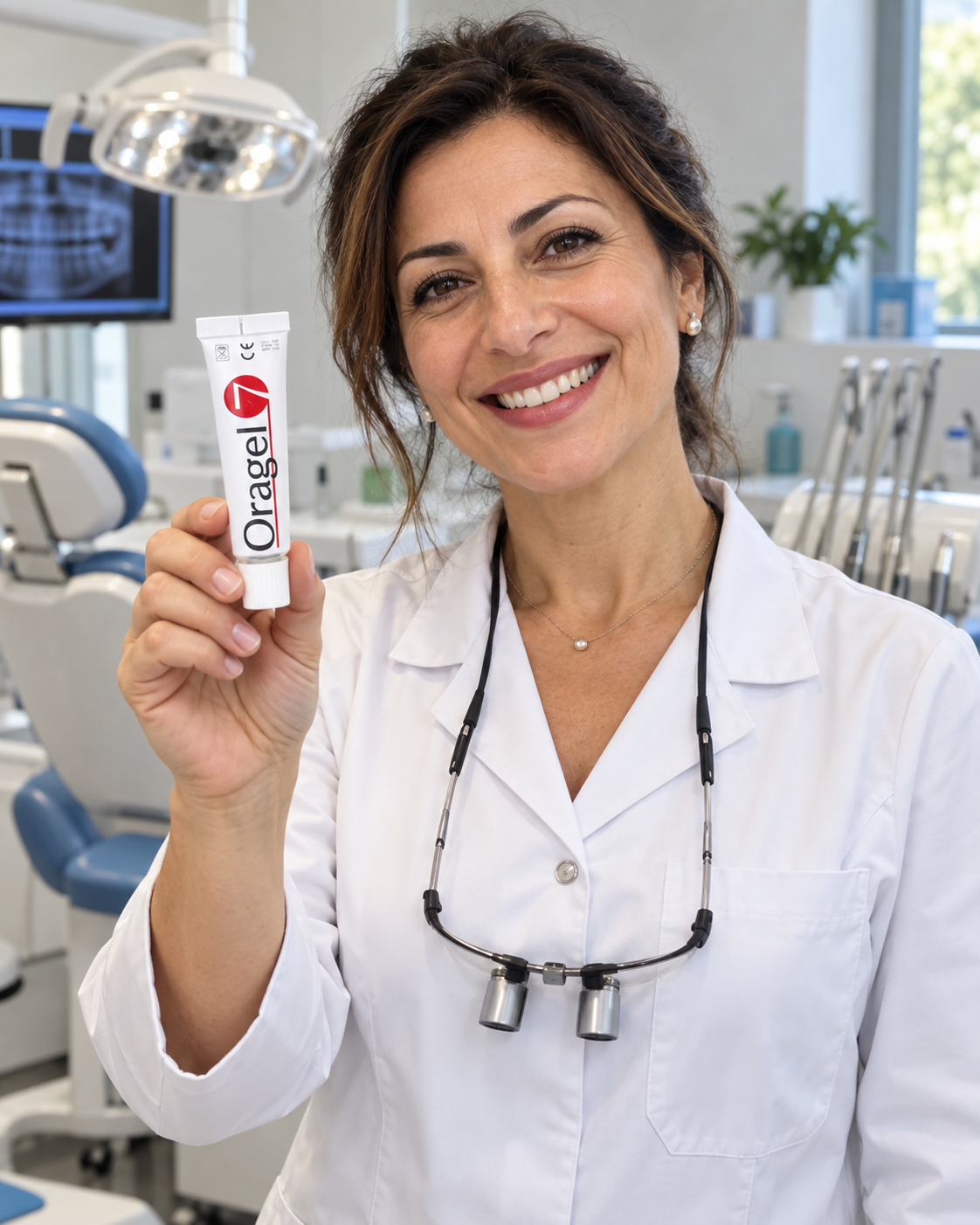
The brand I recommend is Oragel. It is made in Italy from the same dental-grade thermoplastic I was trained on for two decades.
It is not sold in chemists. You order it directly from the company. One tube is £40, which is less than what most people spend on paste in two months, and far less than a single reline. They also have a sale going on right now.
Please do not go and buy any "thermoplastic gel" off Amazon. Most of them are off-the-shelf polymer. Softens too fast, hardens too fast, no memory, no give. Wrong material for the job. The gel used in Italian clinics is dental-grade. It costs more to produce. It behaves differently. It holds for days at a time, not hours.
Step 1: Order your tube from the link below.
Step 2: Warm the tube in a mug of hot water. Squeeze two lines into the plate. Press in and bite down. Trim any extra with scissors.
Step 3: Go to a dinner. Eat what you actually want to eat.
It comes with a 90-day money-back guarantee. That is more than enough time to sit through a real meal and decide for yourself. There is no subscription, no auto-refill, and no hidden charges.
Most patients order 2 to 3 tubes so they always have one on hand. Supply is limited between production runs, and it can take time to replenish once it sells out.











© 2026 Denture Inside. All Rights Reserved. Privacy Policy · Terms of Service
This is an advertisement and not an actual news article, blog, or consumer protection update.
Individual results may vary. This content is general information about denture fit and is not dental advice. If your denture is causing pain, sores or bleeding, see a dentist or denturist.